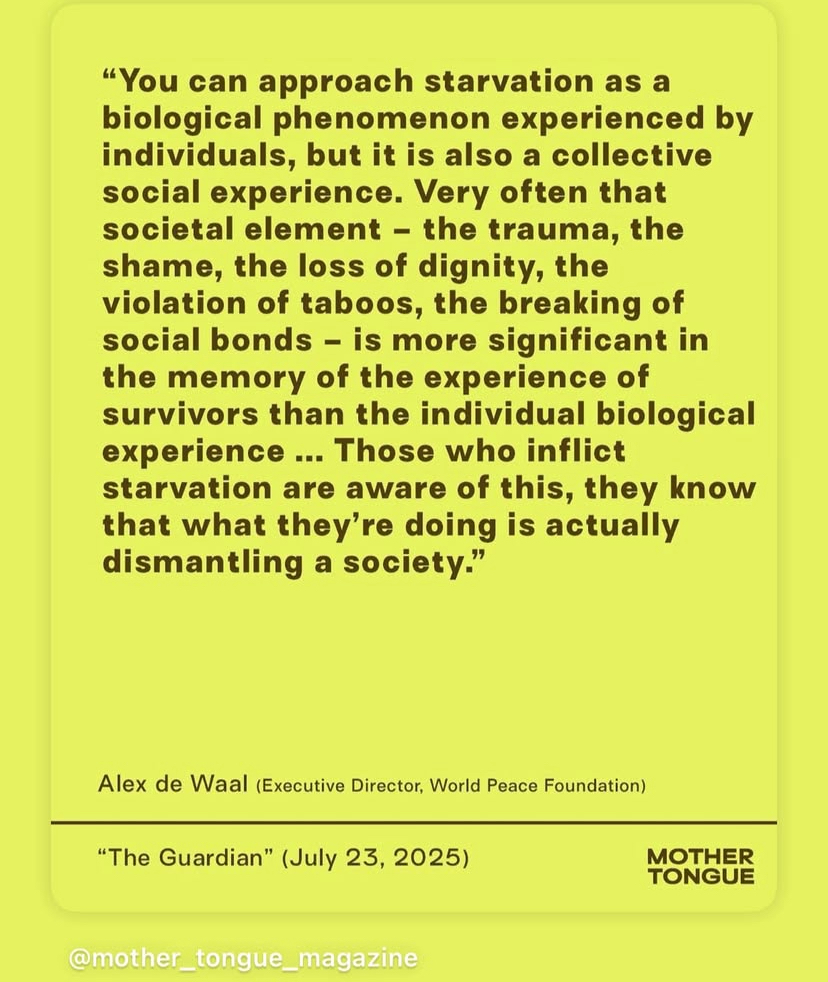
“You can approach starvation as a biological phenomenon experienced by individuals, but it is also a collective social experience. Very often that societal element — the trauma, the shame, the loss of dignity, the violation of taboos, the breaking of social bonds — is more significant in the memory of the experience of survivors than the individual biological experience … Those who inflict starvation are aware of this, they know that what they're doing is actually dismantling a society.”
Alex de Waal (Executive Director, World Peace Foundation)
A society carries that weight for generations.
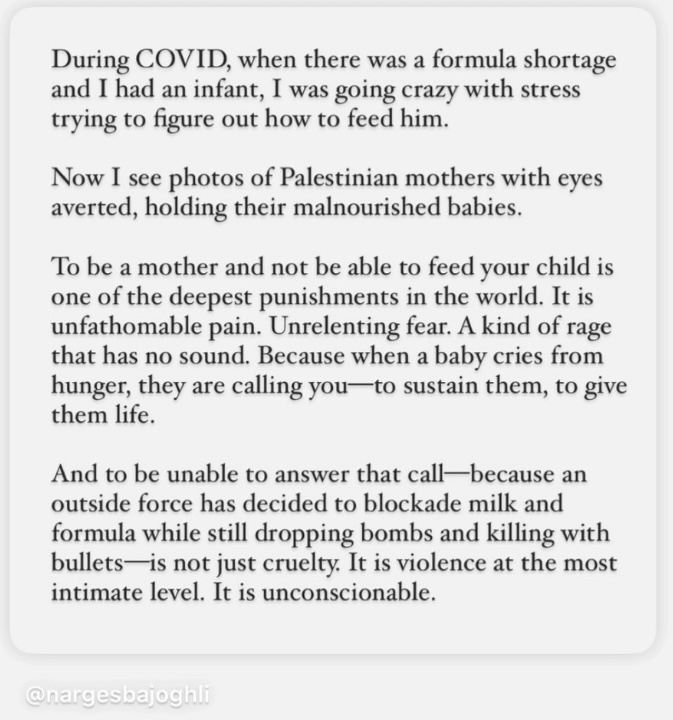
During COVID, when there was a formula shortage and I had an infant, I was going crazy with stress trying to figure out how to feed him.
Now I see photos of Palestinian mothers with eyes averted, holding their malnourished babies.
To be a mother and not be able to feed your child is one of the deepest punishments in the world. It is unfathomable pain. Unrelenting fear. A kind of rage that has no sound. Because when a baby cries from hunger, they are calling you—to sustain them, to give them life.
And to be unable to answer that call-because an outside force has decided to blockade milk and formula while still dropping bombs and killing with bullets—is not just cruelty. It is violence at the most intimate level. It is unconscionable.
We carry that weight. . .

